Athens: An Insider’s Guide
Athens is not merely the city you pass through on the way to an island or before embarking on a cruise. It is ancient, wonderfully lived-in, loud in places, stylish in others, and endlessly rewarding once you stop treating it like a 24-hour Acropolis layover. Give it three nights and two full days at minimum; four nights is even better if you love museums, restaurants, rooftop cocktails, or simply prefer not to sightsee at Olympic speed.
The Parthenon atop the Acropolis
For a first visit, stay central enough to walk to the major sights but choose your neighborhood to match your travel style. Plaka is classic and atmospheric; Koukaki feels more residential and food-forward; Syntagma is convenient and polished; and Kolonaki is the refined choice for boutiques, cafés, galleries, and a less tourist-heavy rhythm. Athens is a city of contrasts, and that is the point: marble ruins, graffiti, elegant hotel bars, neighborhood bakeries, scooters, cats, and the Parthenon quietly supervising it all.
Where to Stay: Three Excellent Athens Hotels at Different Price Points
For a first Athens stay, location matters more than almost anything. Choosing a hotel in or near Plaka, Syntagma, Koukaki, or Monastiraki means the Acropolis, major sights, rooftops, and many of the city’s best meals are within easy reach—so you can spend less time in traffic and more time wondering why you waited so long to order a second round of mezze.
Splurge: The Dolli at Acropolis — Plaka / Monastiraki
For travelers who want a truly special Athens hotel, The Dolli is the polished choice: a small, art-filled boutique hotel with just 46 rooms, suites, and apartments, a rooftop restaurant, and cinematic Parthenon views. It is especially good for milestone trips, honeymooners, design lovers, and clients who want to be in the heart of the action without staying somewhere that feels generic. Its location near the Acropolis and its rooftop dining make it an experience in itself, not simply a convenient place to sleep. Expect luxury-level rates, often roughly $700–$1,500+ per night depending on season and room type.Boutique Luxury: Monument Hotel — Psyrri
Monument is a beautiful small hotel in a restored 19th-century mansion, combining historic character with a more intimate, under-the-radar feel than Athens’s grand hotels. With just nine rooms and suites, it is best for couples and travelers who like thoughtful design, personalized service, and a creative neighborhood with excellent food and cocktail options nearby. It is close enough to walk to the Acropolis, Syntagma, Monastiraki, the Central Market, and Ermou Street, while retaining the slightly bohemian energy of Psyrri. Plan on approximately $260–$650 per night, depending on dates and suite category.Stylish Value: Ergon House — Plaka / Syntagma
Ergon House is a smart choice for travelers who want design, a standout location, and a strong sense of Athens without paying five-star prices. Think “rooms above a very good food market”: the hotel sits on Mitropoleos Street in the historic center, within easy walking distance of Syntagma, Plaka, Monastiraki, and the Acropolis. It is particularly well suited to food-loving couples, solo travelers, and first-time visitors who want their hotel to feel current, casual, and local rather than formal. Rates commonly begin around $225 per night, though peak-season dates can rise substantially.
My quick take: Choose The Dolli for the big, once-in-a-while Athens stay; Monument for intimate boutique character and a more insider neighborhood feel; and Ergon House for the best blend of style, location, and value.
The Essentials, Done Well
Start with the Acropolis, but do not make the common mistake of saving it for the hottest, busiest part of the day. Book a timed entry in advance through the official Hellenic Ministry of Culture ticketing system, and aim for the first available morning slot whenever possible. The Ministry lists the standard adult Acropolis admission at 30 euros and directs visitors to its official online ticketing service.
The early slot is usually your best combination of cooler temperatures, smaller crowds, and gentler photo light. Weekday mornings from April through mid-June and again from mid-September through October are especially favorable, though current seasonal hours and final entry times should always be confirmed before you go.
Afterward, walk down to the Acropolis Museum rather than charging directly toward another ancient ruin. It provides the context that makes the hill above feel more meaningful—and air-conditioning that may feel equally meaningful in summer. The museum’s official site lists general admission at 20 euros and provides seasonal opening hours and online ticket information.
Round out your essential Athens list with:
Ancient Agora: The best place to imagine civic life in ancient Athens rather than simply admire grand ruins.
Roman Agora: Smaller and easy to pair with Plaka.
Plaka and Monastiraki: Ideal for a wander, a coffee, and an early evening drink.
A rooftop with an Acropolis view: Athens’s signature aperitivo moment, best approached with a reservation rather than hope.
Two “Hidden” Gems Worth Your Time
Anafiotika
Just below the Acropolis, Anafiotika is a small pocket of whitewashed lanes, blue-painted details, steps, flower pots, and Cycladic charm that feels almost absurdly out of place in the middle of Athens. It was created by workers from the island of Anafi, and it is one of the city’s most photogenic corners.
Go early, ideally before breakfast crowds begin moving through Plaka. Keep your voice low, do not block doorways, and remember that this is a residential neighborhood—not a movie set or an invitation to photograph someone’s laundry with great intensity.
A Rooftop at Golden Hour
Athens does not need much help being photogenic; the trick is arriving before the tour buses or staying after they have wandered off in search of a buffet.
For a classic Athens evening, reserve a rooftop table with a direct Acropolis view and arrive about 45–60 minutes before sunset. That gives you the golden light on the Parthenon, the gradual glow of the city below, and the moment when the Acropolis lights take over after dusk. Rooftops around Monastiraki, Syntagma, and Plaka are particularly well positioned, but the best choice depends on whether you want a serious dinner, a polished cocktail, or simply one excellent drink with a view. Athens’s best photo vantage points include the city’s rooftop terraces, especially when they frame the Acropolis at twilight.
Advisor move: Do the Acropolis in the morning; earn your rooftop view later. The city is far more enjoyable when you are not trying to admire antiquity while quietly overheating.
Getting Around
The historic center is very walkable, especially within the Acropolis–Plaka–Monastiraki–Syntagma–Koukaki cluster. Still, Athens has hills, uneven marble paving, traffic, and summer heat, so walking every mile simply because a map says it is “only 18 minutes” is a choice, not a virtue.
Use a combination of walking, metro, taxis, and ride-hailing. The official Athens guide notes that a standard ticket covers metro, bus, trolley, and tram travel, and it lists a three-day tourist ticket that includes unlimited local transit plus an airport round trip; confirm current fares before arrival.
Best practical approach for first-time visitors:
Arrange a private airport transfer if arriving tired, late, or with significant luggage.
Walk within each neighborhood rather than crisscrossing Athens all day.
Use taxis or ride-hailing after dinner, during the heat, or when moving between nonadjacent neighborhoods.
Keep offline maps downloaded before heading into the city.
Wear supportive shoes. Ancient Athens did not design its paving with your cute-but-questionable sandals in mind.
Safety Without Drama
Athens is generally a manageable city for visitors, and the U.S. State Department characterizes Greece as generally safe. The practical issue is petty theft—particularly pickpocketing and bag snatching in popular tourist areas and crowded public transportation, including the metro.
A few sensible habits go a long way:
Carry a crossbody bag zipped and positioned in front in crowded places.
Keep wallets and phones out of back pockets or open tote bags.
Be especially alert on the airport metro, in crowded stations, near major sights, and when standing by train doors.
Do not leave bags unattended in vehicles, at cafés, or on public transport.
Use well-lit ATMs and decline help from strangers hovering around ticket machines.
Take official taxis or prearranged transfers; confirm the meter or rate before moving.
This is not a reason to be anxious. It is simply city travel: keep your belongings close, stay aware when the environment gets crowded, and spend your attention on the things that actually deserve it—like whether to order one more plate of grilled octopus.
A First-Timer’s Two-Day Athens Plan
Day One: Ancient Athens and Golden Hour
Early timed entry to the Acropolis.
Acropolis Museum.
Long lunch in Koukaki.
Walk through Plaka and the Roman Agora.
Explore Anafiotika before the lanes become crowded.
Rooftop drink or dinner near Monastiraki, Plaka, or Syntagma at golden hour.
This day works because almost everything is walkable, with no need to waste time crossing the city.
Day Two: Markets, Museums, and Modern Athens
Breakfast in Kolonaki or Syntagma.
Ancient Agora and Monastiraki flea-market area.
Lunch around Psyrri or central Athens.
National Garden and a walk through Syntagma.
Optional museum or gallery visit, depending on interests.
Sunset from Philopappos Hill or a second, more relaxed rooftop evening.
This day adds texture beyond the Acropolis: contemporary neighborhoods, shopping, local food, and the slightly scruffier, more creative Athens that makes the city feel alive.
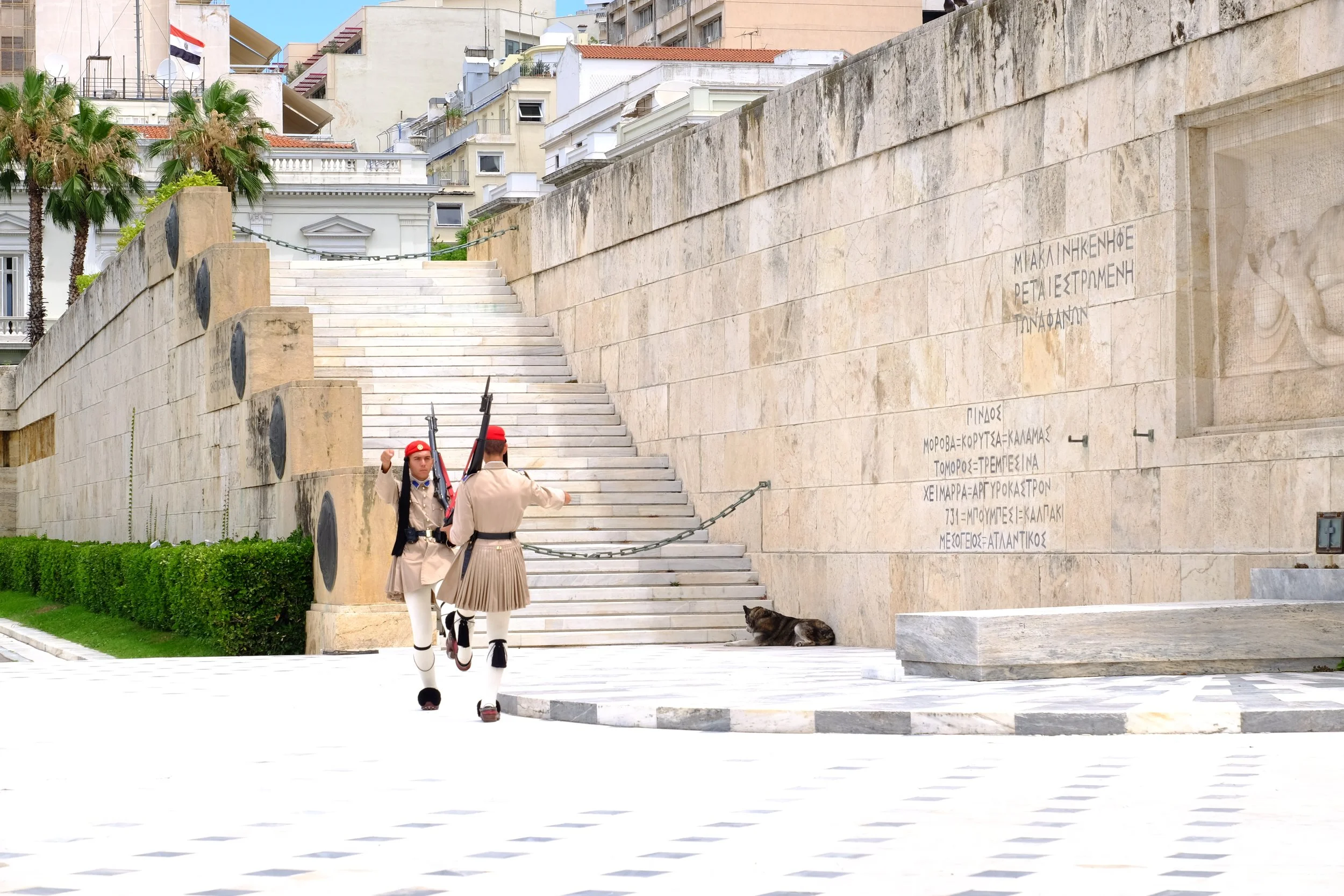
Ceremonial Changing of the Guard
The Changing of the Guard (Evzones) in front of the Tomb of the Unknown Soldier at Syntagma Square.
The Athens Mindset
Athens is best enjoyed with a bit of flexibility. Book the Acropolis and one or two sought-after dinners; leave the rest open enough for a café stop, a long lunch, a spontaneous wine bar, or an accidental detour down a lane that turns out to be prettier than the one you planned to photograph.
Treat it as an opening chapter, not a transit lounge. Athens gives travelers a proper dose of history, but its real appeal is the pleasure of seeing an ancient capital function as a modern, opinionated, delicious city.
